

Self-Liberation of Parson Sykes
Enlistment in the Union Army
Synopsis
During the latter half of the American Civil War, more than 180,000 African American soldiers served in the ranks of the Union Army as United States Colored Troops (USCT). The Self-Liberation of Parson Sykes: Enlistment in the Union Army narrates Parson’s ordeal from his status as a “contraband of war” to his service as a USCT soldier, culminating in his freedom at age seventeen. Parson felt compelled to challenge both the institution of slavery and the negative stereotypes about Black people that existed before his enlistment.
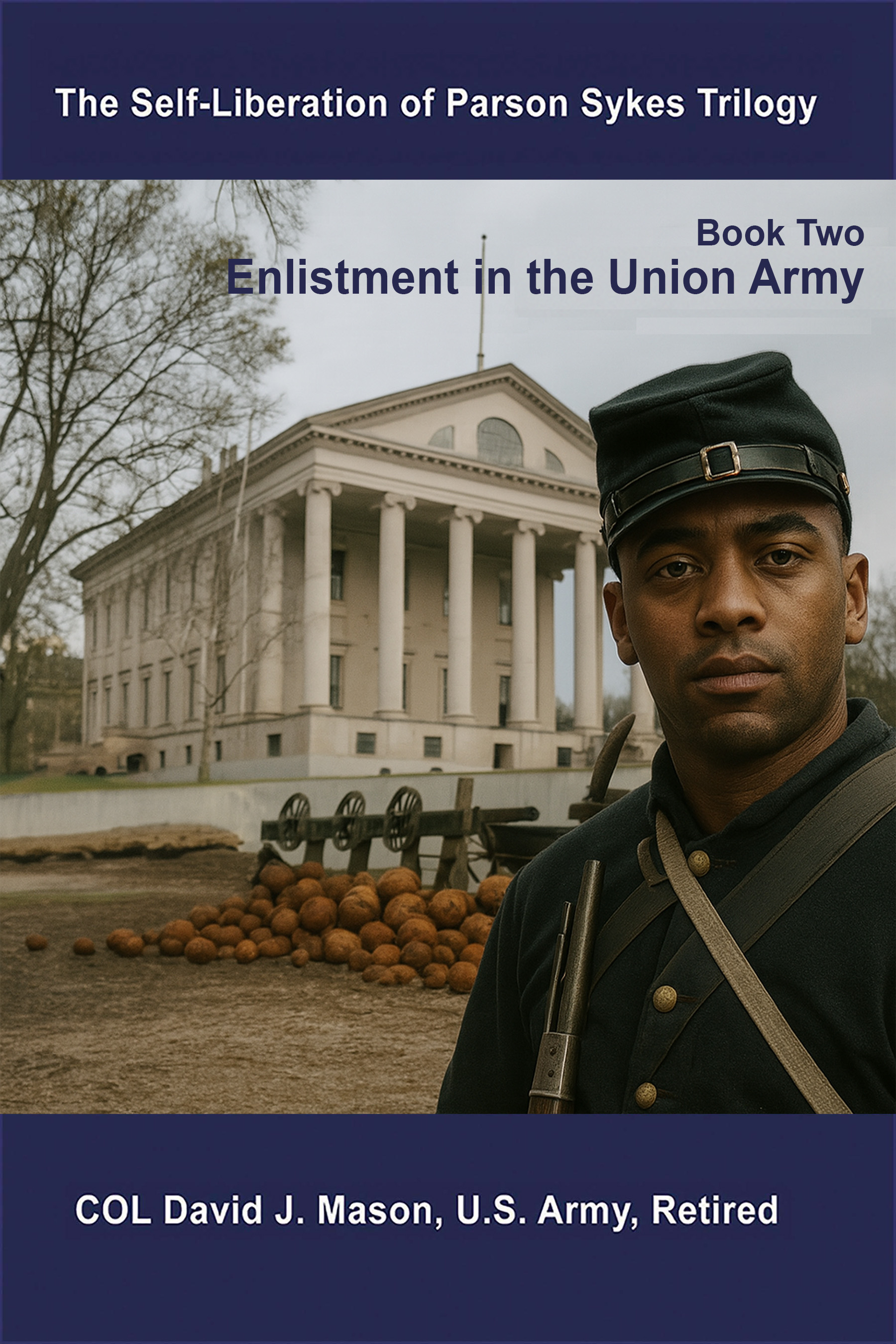 On December 3, 1864, the U.S. War Department reorganized the Army of the James to form two racially segregated units. The Department merged the white infantry troops from the discontinued 10th and 18th Army Corps to form the new XXIV Army Corps. They melded the Black regiments to create the new XXV Army Corps (USCT), commanded by Major General Godfrey Weitzel. It was the only all-Black Army corps in United States military history.
By the end of 1864, Black soldiers had earned the respect of the War Department and were heavily recruited. In a refugee settlement near Fort Monroe, USCT soldiers, including Parson, assisted refugees in gaining the strength, stability, and independence needed to build a better life. Many individuals were in a weakened state due to the harsh conditions of their enslavement and sought basic humanitarian support.
In December 1864, Parson began his basic individual and collective training of marching and fighting drills, part of the daily routine for the Civil War soldier. Basic training helped Parson improve his ability to address social, political, and economic challenges by developing innovative solutions. Enrolled in the Union Army XXV Corps, he encountered mentors and advisors who urged him to question the notion that Black people were an inferior race.
Being stationed at Fort Burnham, near General Grant's field headquarters in City Point, Virginia, allowed Parson to continue his journey for self-liberation and the pursuit of human and civil rights during the war. In March 1865, the XXV Corps received orders from General Ulysses S. Grant to attack the rebels' fortified lines on the morning of Monday, April 3. Attacking the earthworks of the Army of Northern Virginia would be a suicide mission. However, Parson viewed the mission as an opportunity to embrace the challenge of freedom and self-liberation.
After Grant assaulted Petersburg, he ordered the XXV Corps to accomplish the primary military objective of the war, the capture of Richmond, Virginia. On April 3, 1865, the 36th Infantry Regiment (USCT) enjoyed the distinction of being the first Union forces to enter the fallen capital of the Confederate States of America. At Appomattox, Virginia, other regiments of the XXV Corps cut off the rebels’ last avenue of escape, prompting Robert E. Lee's surrender on April 9, 1865.
Five days after Lee's surrender, on the evening of April 14, 1865, Parson mourned the assassination of President Lincoln. It was particularly devastating and frustrating for Parson. After fighting a civil war for freedom, he suddenly lost his commander-in-chief. Hope is likely at a low point in this part of the story, and the ultimate challenge feels like a mission impossible. Following a month of occupation duty near Richmond, the War Department ordered the XXV Corps to Texas.

Self-Liberation of Parson Sykes Trilogy
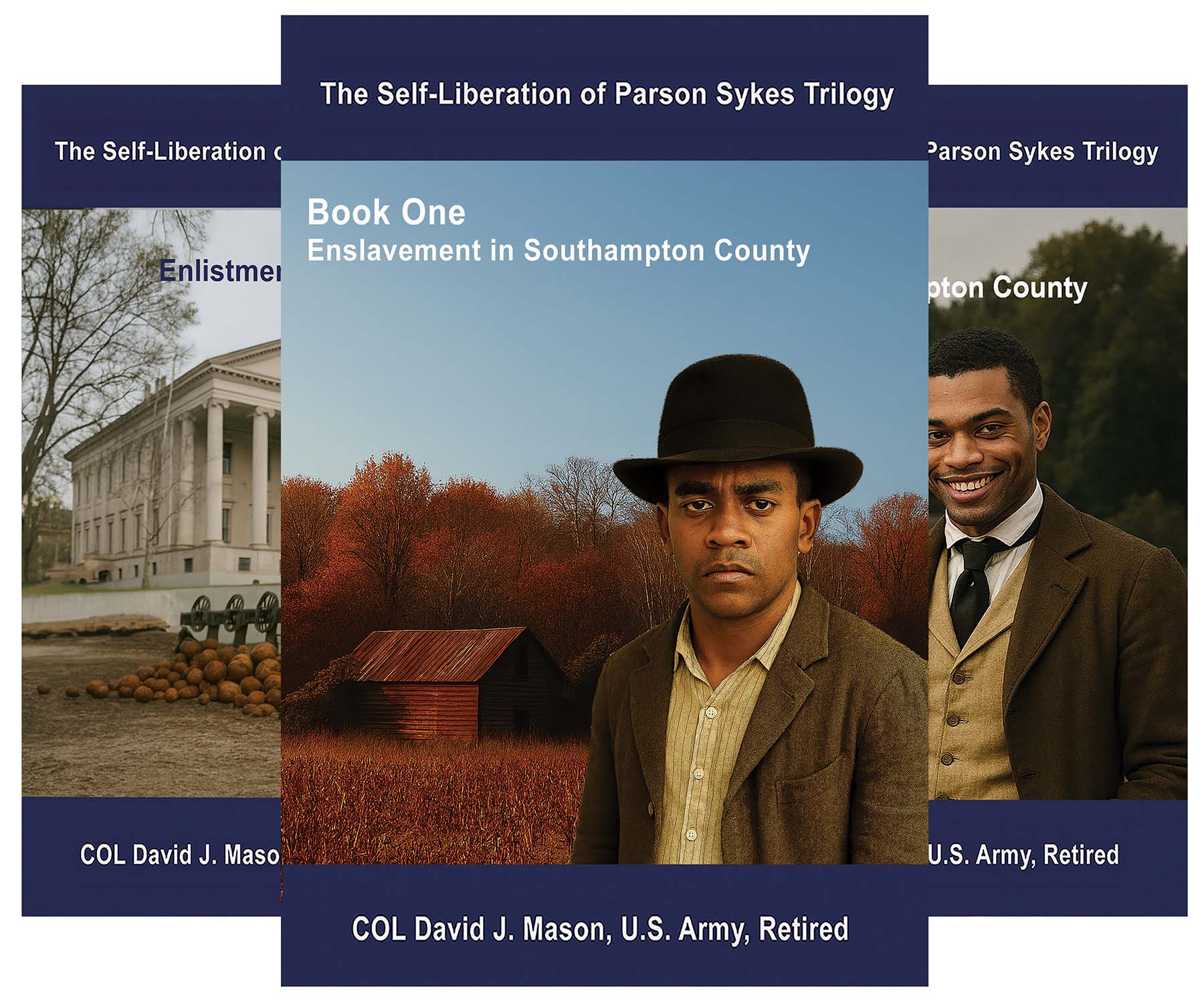 Step into the untold story of courage, resilience, and freedom. The Self-Liberation of Parson Sykes trilogy brings to life the gripping journey of a young enslaved man who defies oppression, escapes to Union lines, and fights for justice during the Civil War.
Across three powerful books, you will witness Parson’s transformation—from bondage in Southampton County, to his enlistment in the United States Colored Troops, to his determined stand for civil rights during Reconstruction. This trilogy is not just historical fiction—it is a deeply human narrative that illuminates the fight for equality and the enduring spirit of self-liberation. If you are ready to experience a story that blends history, heart, and heroism, don’t wait—discover the trilogy today on Amazon.
The Self-Liberation of Parson Syke Trilogy tells a powerful and inspiring saga centered on one man's unwavering fight for justice and equality. It cites historical political events that abetted Parson’s self-liberation in a compelling narrative, ensuring readers understand the accuracy and reliability of the information presented. This saga profiles Parson’s continued ordeal to earn freedom, citizenship, equality, and to own land after serving honorably as a soldier of the USCT. Hopefully, this true story will give readers a deeper understanding of the complex challenges that formerly enslaved Black people faced before, during, and after the Civil War.
Add The Self-Liberation of Parson Sykes to your Kindle or bookshelf now and join readers uncovering one of the most compelling Civil War journeys ever told.