


Self-Liberation of Parson Sykes
Return to Southampton County
Synopsis
With the Civil War's victorious end, Parson Sykes achieved self-liberation, but he grew frustrated with the Reconstruction programs. At the suspension of open hostility, he recognized the need for complete emancipation. Following the defeat of the Confederacy, he must advance civil and human rights to gain real freedom. As post-war planning emerged, new challenges arose. Parson grew frustrated with the conniving practices of racial superiority and inferiority that hindered everyday freedom.
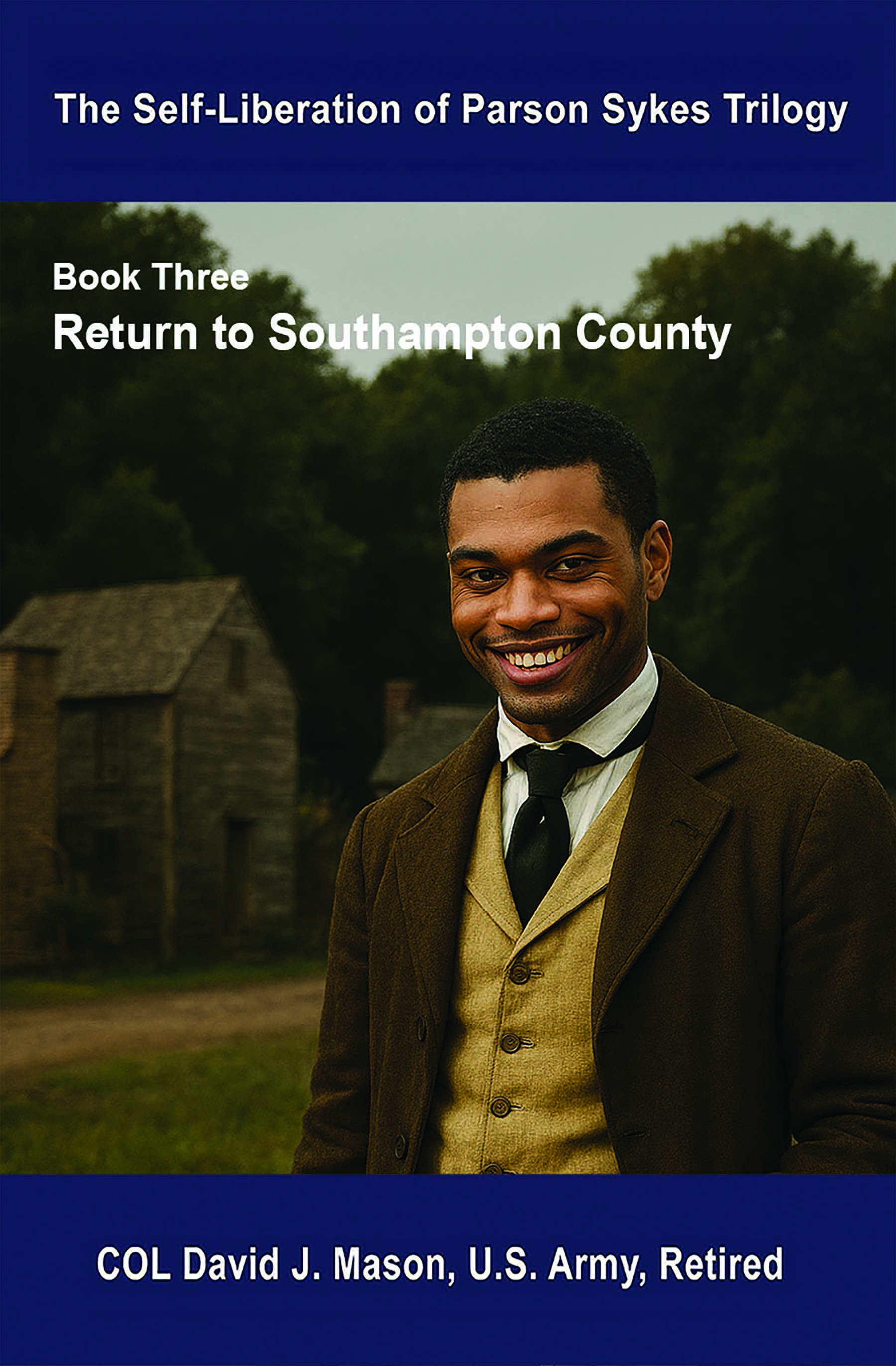 Parson experienced the chaotic end of the Civil War while serving in the Union Army. Grappling with military-civil affairs duty, political uncertainty, and the unfulfilled promises of emancipation, Parson realized the Emancipation Proclamation did not go far enough. Following the defeat of the Confederacy, vicious racial violence characterized the resistance to integrating Black people.
Parson joyously learned that the Federal government created the Freedmen’s Bureau to help formerly enslaved people transition to freedom with humanitarian aid. Parson relentlessly advocated and pursued education, political participation, and full citizenship. With the creation of the Bureau, he felt less pressure.
Parson witnesses the final year of the Civil War and the chaotic dawn of Reconstruction, learning about the complex political fight for civil rights from mentors and personal observation. Parson’s insights taught him that in war, the victory is just the blossom, and nothing is more frustrating than a bloom that refuses to morph into some fruit.
Parson returns to Virginia, where he confronts the defeated confederates, including the rise of hate groups and violent insurgents. In Southampton County, the Bureau mediated sharecropping agreements between white landowners and Black families after the constitutional end of enslavement. Despite granting freedom, the federal government took little action to help Black families acquire the promised land.
Through his interactions with mentors, Parson becomes a fierce advocate for the human and civil rights of Black Americans, focusing on education, land ownership, and political participation. He navigated the legal and social struggles surrounding the passage of the 13th, 14th, and 15th Amendments, revealing both the hope they inspired and the violent backlash they provoked.
With the passage of these amendments, they guaranteed equal rights for all citizens and prohibited states from denying the right to vote on the basis of race or color. Simply put, Parson’s efforts to gain freedom, citizenship, and equality required long-term commitment, resilience, and perseverance.
Having secured his right to vote and purchase land, Parson married, started a family, and established himself as an independent community leader in Southampton County, achieving a hard-won personal liberation despite the systemic failures of the Reconstruction era.
As revealed by Parson’s genealogy, Reconstruction has ongoing effects, especially in the importance of addressing root causes and the need for ongoing human and civil rights enhancements. Racism is an inescapable reality in American society. Still, the complexities of social problems, with their cultural subtleties and interconnectedness, demand a deeper understanding and more nuanced approaches than those used in political solutions.

Self-Liberation of Parson Sykes Trilogy
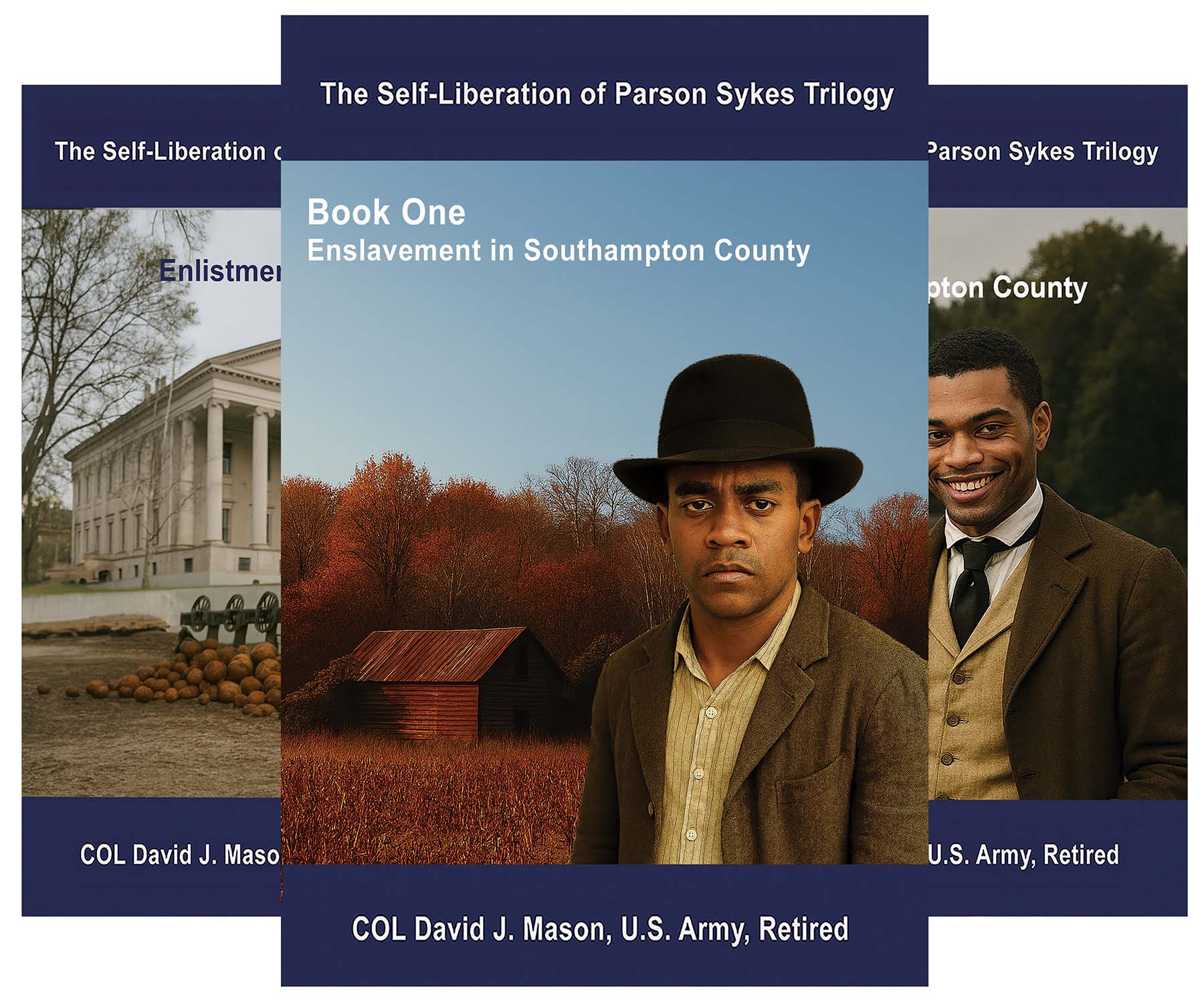 Step into the untold story of courage, resilience, and freedom. The Self-Liberation of Parson Sykes trilogy brings to life the gripping journey of a young enslaved man who defies oppression, escapes to Union lines, and fights for justice during the Civil War.
Across three powerful books, you will witness Parson’s transformation—from bondage in Southampton County, to his enlistment in the United States Colored Troops, to his determined stand for civil rights during Reconstruction. This trilogy is not just historical fiction—it is a deeply human narrative that illuminates the fight for equality and the enduring spirit of self-liberation. If you are ready to experience a story that blends history, heart, and heroism, don’t wait—discover the trilogy today on Amazon.
The Self-Liberation of Parson Syke Trilogy tells a powerful and inspiring saga centered on one man's unwavering fight for justice and equality. It cites historical political events that abetted Parson’s self-liberation in a compelling narrative, ensuring readers understand the accuracy and reliability of the information presented. This saga profiles Parson’s continued ordeal to earn freedom, citizenship, equality, and to own land after serving honorably as a soldier of the USCT. Hopefully, this true story will give readers a deeper understanding of the complex challenges that formerly enslaved Black people faced before, during, and after the Civil War.
Add The Self-Liberation of Parson Sykes to your Kindle or bookshelf now and join readers uncovering one of the most compelling Civil War journeys ever told.